
Belgrade, Serbia
MR DESIGN STUDIO ®
Industrial Design · Graphic Design · 3D Modeling & 3D Rendering · 3D Animation · Website · Marketing · VR ·
Belgrade, Serbia
Be recognized.

A brand is your story, your voice, your promises, and everything that makes your company unique among thousands of others. It's what consumers feel when they hear your name or see your logo - it's the impression you leave in their hearts.
However, in a constantly evolving world, brands must keep up with trends, listen to consumer needs, and adapt to new challenges. This brings us to rebranding - the process of reshaping and refreshing an existing brand to respond to market changes.
It's an opportunity to reconnect with your audience, to show that you're staying current with trends, and to enhance your business. Rebranding brings a new look, a new message, and a new focus - all to strengthen your market position and attract new generations of consumers.

Rebranding is a strategy that entails a comprehensive change and refresh of your company's identity to better fit into the modern market and meet changed consumer expectations. This process may include the following steps:
1. Analysis of Current Situation: The first step in rebranding is a detailed analysis of the company's current state. This includes reviewing the current visual identity, slogan, logo, colors, typography, and other elements, as well as analyzing current marketing and communication strategies, target audiences, brand perception, and competition.

2. Rebranding Goals: Setting clear rebranding goals is crucial. Goals may include attracting a new target group, refreshing the brand's image, increasing recognition, improving the perception of product/service quality, or redefining market positioning.
3. Identifying the Target Audience: : Understanding the target audience is crucial to adapting the new brand identity to their needs, preferences, and values.
4. Developing a New Visual Identity: Based on the analysis and set goals, developing a new visual identity is the next step. This involves designing a new logo, choosing new colors, typography, and other graphic elements that will represent the new brand identity.
.jpg)
5. Redesign of Packaging, Website, and Marketing Materials: Along with the new visual identity, rebranding may involve redesigning product packaging, the website, social media, promotional materials, brochures, and other marketing materials.

6. Internal Engagement and Employee Training: : Involving employees in the rebranding process is crucial to ensure their support and understanding of the changes.
7. Communication Strategy: Developing a comprehensive communication strategy is key to the success of rebranding. This includes campaign planning, choosing communication channels, crafting messages, and monitoring campaign effectiveness.
8. Implementation: Implementing rebranding can be complex, requiring careful planning to ensure a smooth transition to the new brand identity. Implementation may involve gradually introducing the new identity, promoting the new image, updating the website and social media, and other marketing activities.
9. Measuring Success: After implementing rebranding, it's necessary to measure the success of the changes. This includes monitoring the perception of the target audience, measuring increased recognition and attraction of new customers, and determining whether the set goals have been achieved.
10. Continuous Brand Maintenance: After rebranding, continuous brand maintenance is crucial. The company should continue to communicate with the target audience and ensure consistency in all marketing activities to sustain the new brand identity in the long run.

The decision to rebrand should not be the result of a sudden whim but rather careful analysis. Here are some indications that it might be time for rebranding:
1. Outdated Identity: : If your logo and visual identity look like they're from a previous era, it's a sign that it's time for changes.
2. Declining Sales: If you notice a continuous decline in sales, your brand might have lost its appeal to consumers.
3. Change in Target Audience: If you want to target a new audience, adapting your identity to attract them is necessary.
4. Change in Mission or Values: If your company is shifting its focus or values, rebranding can help clearly communicate that to your customers.
5. Stronger Competition: If competitors have a more appealing identity, your brand might be losing market share.
6. Negative Publicity: If your company has experienced negative events that have damaged its reputation, rebranding can help overcome that situation.
Companies typically undergo rebranding every 5 to 10 years, some more frequently than others, depending on their needs and market changes. The key is to either follow changes or create those same changes.
The logo is the face of a brand representing its identity and values. During rebranding, designing a new logo is a crucial step. It should be unique, simple, and easily recognizable, reflecting the company's vision and mission.
A well-designed logo has the power to leave a lasting impression on consumers, making it a vital tool for brand recognition and building trust. A new logo can signal change and innovation, attracting potential customers and interested parties.
However, a logo can also be a complete miss, which is why it's essential for logos to be designed by professionals rather than inexperienced designers. Poor logo design can cause significant damage to your company (significant financial losses, loss of trust from your clients, permanently tarnished company image, etc.), simply because you wanted to save money in the short term.

Examples of Successful Rebranding:


Unsuccessful Rebranding Example
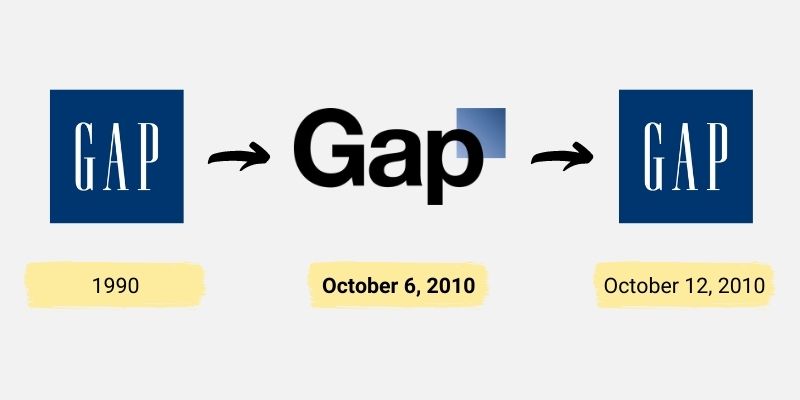
The company "Gap" attempted to redesign its logo in 2010 but faced negative consumer reactions and had to quickly revert to its previous identity. This incident highlighted the importance of carefully planning and testing changes before taking action.
Colors evoke emotions and create associations with a brand. During the rebranding process, the selection of new colors requires careful consideration. The chosen colors should align with the company's values, target audience, and the message it wants to convey.

By using the right color palette, a company can evoke desired emotions, create a cohesive brand identity, and stand out from the competition. Colors have a significant impact on consumer behavior and perception, making them an essential aspect of rebranding.

Yellow: Yellow is associated with optimism, positivity, and creativity. It symbolizes happiness and warmth, making it an excellent choice for brands aiming to convey a sense of joy and friendship. Brands using yellow in their logo often want to attract attention and stand out. However, excessive use of yellow can evoke feelings of anxiety or overwhelm.
Red: Red is a powerful and intense color often associated with passion, love, and excitement. It can evoke strong emotions and is frequently used in marketing to attract attention and prompt action. Brands incorporating red into their logo, such as Coca-Cola and YouTube, aim to create a sense of urgency or stimulate appetite. However, red can also be associated with danger, so it's essential to use it thoughtfully.
Blue: Blue is a versatile color associated with trust, reliability, and tranquility. It is frequently used by technology, healthcare, and financial companies to convey professionalism and reliability. Brands like Facebook, IBM, and Samsung use blue in their logos to establish trust and credibility. However, excessive use of blue may appear cold or distant.
Black: : Black is a classic and sophisticated color associated with elegance, power, and authority. It represents strength, professionalism, and timelessness. Brands like Chanel and Nike use black in their logos to convey luxury and sophistication. However, too much black can appear heavy or unapproachable.
Using a well-thought-out color scheme can significantly impact how consumers perceive a brand, so it's crucial to consider the psychological effects of different colors when rebranding.
Redesigning packaging is a critical aspect of rebranding, especially for product-based companies. Packaging is often the first point of physical contact with customers and must effectively convey the brand's story and values.


A fresh and modern packaging design can create excitement and curiosity among consumers, encouraging them to try the product.
Good Examples of Packaging Redesigns
In an attempt to stand out from the mundane, traditional air fresheners, TRUE created these three unique labels for its cans, incorporating scents and making the product more colorful and fun.

Apple Packaging

Wine or flowers? With the unique design of Blossom Cava sparkling wine, you no longer have to make a tough decision. The label on the bottle is a fun twist on several romantic standards.

Bad Example of Packaging Redesign
An unfortunate case of rebranding failure is Tropicana, a well-known beverage company. In 2009, Tropicana decided to simultaneously rebrand all elements of its product and packaging. The rebranding included simpler packaging, a new logo design, and a new color palette. Unfortunately, this decision turned into a debacle for Tropicana, resulting in significant negative consequences for both farmers and the company itself.
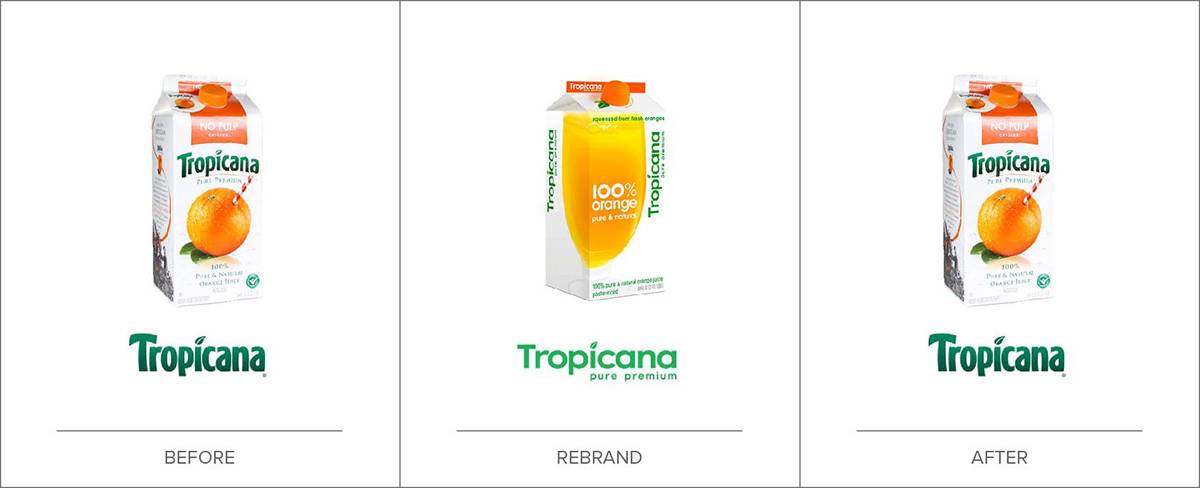
The main problem with Tropicana's rebranding was that consumers did not recognize the product on the shelves. The new packaging design lacked the iconic orange image; instead, it contained orange liquid in a glass. As a result, Tropicana's sales dropped by approximately 20%. Customers couldn't identify the product they were used to buying, leading to revenue loss.
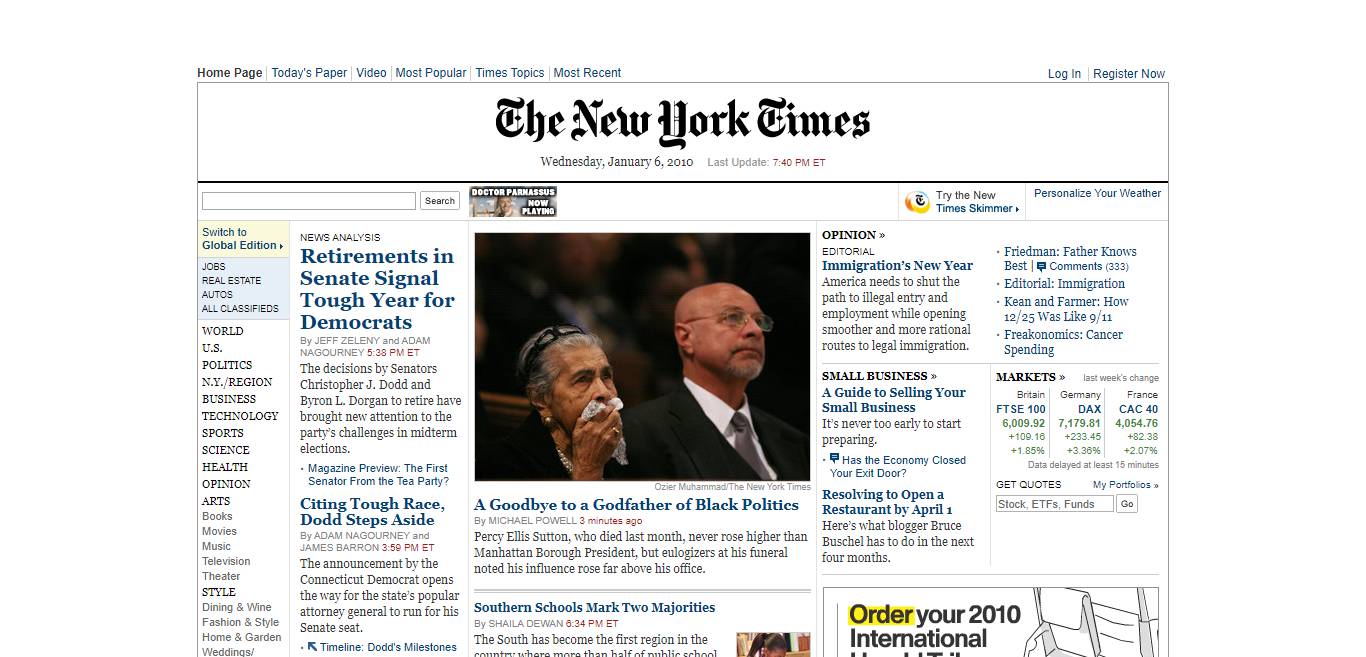
The internet has become a crucial place for interacting with customers, so redesigning the website with a new visual identity is an important step. This includes adapting the design, colors, typography, and symbols to achieve brand consistency on digital platforms.
Website Design in 2010
Website Design in 2023

Also, in website redesign, attention to SEO optimizationis important, aligning with new regulations set by Google to improve the website's search engine ranking.
Profiles on social media platforms are often a key channel for communicating with the target audience. Adapting social media profiles and content to the new brand identity is an important step to ensure consistency in communication.

The digital age brings rapid changes, and companies must be ready to adapt to new trends on social media to remain relevant and attract the target audience. With platforms like TikTok and new video content formats such as YouTube Shorts and Instagram Reels, companies have the opportunity to stand out in a dynamic and innovative way.
TikTok, with its short and engaging videos, has become one of the most popular social media platforms among younger audiences. Companies should leverage this platform to create authentic content that engages users in a unique way. Creating original TikTok videos can help companies connect with their audience on an emotional level and build brand loyalty.
Additionally, new video content formats like YouTube Shorts are becoming increasingly popular. These short and quick video clips allow companies to quickly convey their message and capture the audience's attention. Seize this opportunity to experiment with different styles of video content and tailor them to your target audience.

The cost of rebranding can vary significantly, depending on the scope of changes and the size of the company. Small business owners will likely have lower costs than large multinational companies. Here are approximate values:

1. Small company (up to 10 employees): Rebranding a small company can cost from a few thousand to tens of thousands of euros.
2. Medium company (50-500 employees): Medium-sized businesses can expect costs ranging from 15,000 to 100,000 euros for rebranding.
3. Large company (500+ employees):Rebranding large companies can cost several hundred thousand or even millions of euros, including promotion and marketing campaigns.
To determine cost-effectiveness, expected results in terms of increased sales, greater attraction for new customers, and stronger loyalty from existing clients should be considered.
Re-brending može doneti brojne koristi vašoj kompaniji:
1. Refreshed Identity: Your brand becomes more modern and relevant to the contemporary market.
2. Increased Recognition: New visual identity and marketing campaigns help position your company better in consumers' minds.
3. Attraction of New Consumers: Rebranding can attract a new target group that was not previously considered.
4. Stronger Loyalty from Existing Customers: If rebranding brings positive changes, existing customers will value you more and remain loyal.
5. Increased Market Share: A stronger brand can increase your competitiveness and enable you to capture a larger market share.
6. Refreshed Company Culture: Rebranding can have a positive impact on internal processes, improve team spirit, and encourage employees to be more engaged.
Negative Consequences of Rebranding
Rebranding can be a risky move, especially if not well thought out and executed. Here are a few negative consequences that can occur:
1. Loss of Existing Customers: If changes are not well-received, the existing customer base may feel lost and turn to the competition.
2. Financial Losses: Unsuccessful rebranding can lead to significant financial losses.
3. Misinterpretation of the New Message: If the new message is not clearly communicated, consumers may misunderstand what your company represents.
4. Incomplete Implementation: Failing to apply the new identity in all aspects of the business can confuse consumers.

Twitter, the popular social media platform, is undergoing a significant renaming, and the new name will be X. This change comes as part of Elon Musk's vision for the company. The renaming process involves more than just a name change; it encompasses a series of changes in the platform's visual identity and future direction.
The renaming is led by Elon Musk, who recently stepped down as CEO but still has a prominent role in the company. Musk is a proponent of artificial intelligence (AI) and envisions X as a platform offering more than social media services. The new direction aims to provide users with a comprehensive and integrated online experience, serving as a hub for various online needs.
The changes are symbolized by replacing the iconic Twitter bird logo with a "temporary X logo." The new logo represents a change in the platform's focus and symbolizes its transformation into something more than just a microblogging service. Also, the domain X.com now redirects to Twitter.com, confirming the transition.
CEO Linda Yaccarino, who became Twitter's CEO after Musk's acquisition, expressed the company's ambitious plans for X. As part of the renaming to X, Twitter will use AI to expand its capabilities and provide users with a more interactive and connected online experience. The goal is to create a hub for online communication and commerce, with AI power offering unlimited possibilities.
Musk's favoritism towards the letter "X" dates back two decades when he founded X.com, an online payment and banking company that later merged with PayPal. Now, he has reacquired the domain X.com to reflect Twitter's transformation into X. The letter "X" has also been prevalent in various Musk ventures, from his company SpaceX to an AI-focused company called xAI.
The renaming of Twitter to X comes at a crucial moment for the platform, facing financial challenges and increasing competition from new social networks like Threads. By embracing a new direction and renaming to X, Twitter aims to refresh its image and attract a wider audience.
Twitter's renaming to X represents a bold move towards redefining the identity and future of this platform. As the company strives to diversify its offerings and harness the potential of interactivity through AI, it will be interesting to see how users react to these changes and how X positions itself in the competitive social media landscape.
Rebranding is a powerful marketing tool that allows companies to refresh their identity, attract a new audience, and reposition themselves in the market. Through rebranding, companies can change their logo, name, visual identity, or even their main focus to better reflect their values, goals, and evolve according to changing market demands.
This transformation can be crucial for companies looking to revive their brand, create a new perception among consumers, or differentiate themselves from the competition. With carefully crafted rebranding, companies can create an emotional connection with their target audience, improve visibility, and build long-term customer loyalty.
However, rebranding is not merely a change in appearance or name. It requires a deep understanding of goals, market, and audience, as well as careful planning and implementation. It's important for companies to recognize their identity and authenticity to avoid losing existing customers.
In conclusion, rebranding represents a crucial strategy for companies aiming for long-term success and staying relevant in a rapidly changing business environment. With proper guidance and vision, rebranding can be a powerful step towards new horizons and market prosperity."